For toy remote control car products planning to enter the Australian and New Zealand markets, RCM certification is not an optional additional qualification, but a mandatory access threshold for entering the local markets. RCM certification integrates multiple core requirements such as electrical safety and electromagnetic compatibility, covering categories such as electric toys and small electric appliances. Toy remote control cars are naturally included in the scope of certification supervision due to their built-in motors, circuit boards and charging modules.
Different from the conventional quality inspection of ordinary toys, RCM certification focuses more on electrical safety and electromagnetic interference control. Toy remote control cars are prone to generate electromagnetic radiation during high-speed operation and signal transmission. Without compliant testing, they may not only interfere with surrounding electronic equipment, but also cause potential safety hazards such as overheating and short circuit due to circuit design defects. Especially for children, safety and compliance are non-negotiable.
When applying for RCM certification for toy remote control cars, enterprises need to focus on product structure design, electrical insulation performance, battery compatibility and electromagnetic compatibility indicators. Every link from sample testing to technical document sorting and compliant label affixing must strictly follow the Australian and New Zealand regional standards to avoid delaying the listing cycle due to missing materials or unqualified testing.
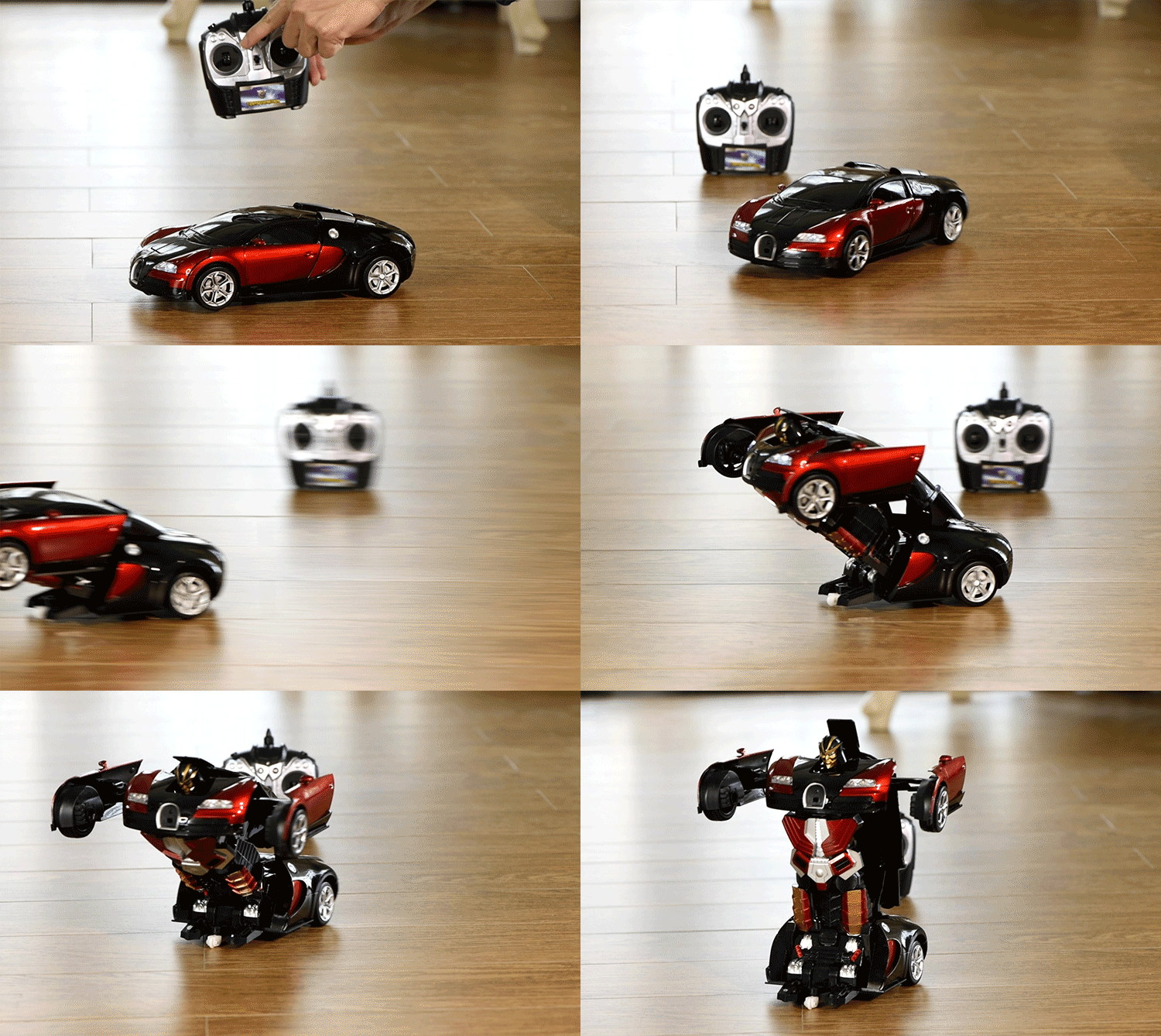
After obtaining RCM certification, enterprises can affix the RCM mark on products and packaging, which is not only a compliance certificate but also a quality endorsement, effectively enhancing the trust of overseas buyers and consumers. On the contrary, toy remote control cars that have not passed the certification will not only fail to clear customs and enter the country, but also face risks such as cargo detention, fines and market ban, directly affecting the brand's overseas layout.
In the current increasingly standardized cross-border toy trade, toy remote control car manufacturers should plan the certification process in advance, select third-party testing institutions with qualifications, optimize product design to adapt to overseas standards, and expand the Australian and New Zealand markets based on compliance, so as to achieve stable development of overseas business while ensuring product safety.