Nowadays, TWS headsets maintain high consumer popularity. Many domestic manufacturers are turning to overseas markets in pursuit of new growth opportunities. However, quite a number of enterprises run into unexpected troubles in their global expansion: ready‑for‑shipment goods are intercepted in air or sea transport, customs clearance is rejected outright, and entire batches of goods get returned, causing heavy losses. Very often, the problem is not the quality of the headsets themselves, but the lack of valid UN38.3 compliance documents for the built‑in lithium‑ion batteries. Many small‑ and medium‑sized manufacturers have limited knowledge of this certification and take chances, only to suffer avoidable financial losses.
What is UN38.3 Certification?
Many enterprises tend to mix up concepts: UN38.3 is not a quality test for complete headsets. It is a set of compliance testing requirements for lithium‑ion battery transportation safety. TWS headsets are compact and fitted with built‑in lithium‑ion batteries. Whether transported together with finished headsets or shipped as separate replacement batteries, these batteries must comply with international transport rules for air and sea exports.
Derived from United Nations standards for lithium‑ion battery transportation, UN38.3 is designed to simulate various unexpected conditions batteries may face during long‑haul logistics, and to verify whether batteries will cause dangers such as fire, liquid leakage or explosion. It is worth special attention that the certification targets the internal battery cells of headsets, instead of headset shells or circuit boards. Without this test report, freight forwarders may refuse shipments directly, and overseas customs have the authority to detain goods.
UN38.3 Certification Application Process
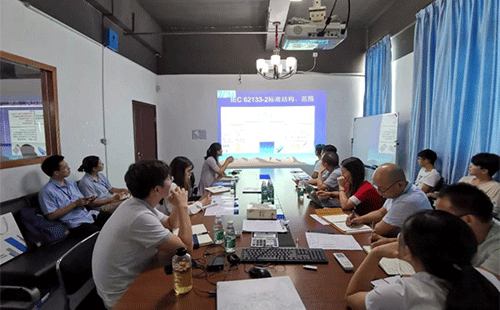
The whole application procedure is uncomplicated and can match enterprises’ shipment schedules. First, enterprises submit basic materials such as battery specifications and parameters, together with corresponding battery samples to a certification body. Qualified laboratories will then carry out a full set of simulation tests in accordance with standards, replicating real‑world transit conditions including temperature swings, vibration, extrusion and impact. After passing all test items, the institution issues an official UN38.3 test report. Equipped with the report and corresponding transport declaration documents, enterprises can proceed with logistics and customs clearance.
Should any test item fail, the institution will provide optimization suggestions. Enterprises can adjust battery solutions and arrange retesting to secure a valid final report.
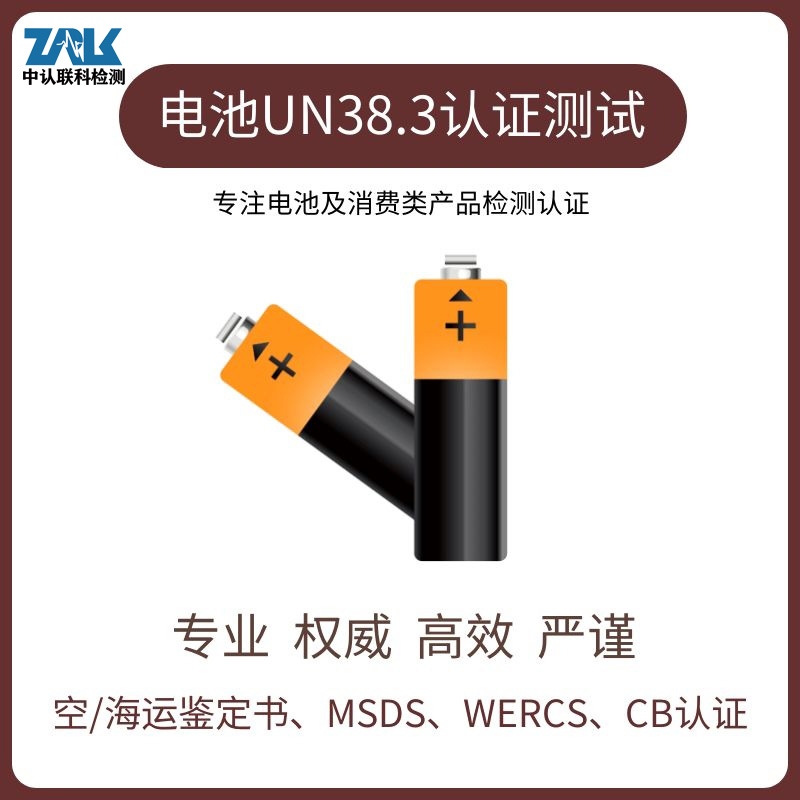
Core Values of UN38.3 Certification
First, guarantee smooth logistics: fundamentally reduce risks of cargo detention and return, and avoid freight and warehousing losses caused by large‑batch shipment incidents.
Second, avoid safety liabilities: identify hidden battery risks via testing, lower the chance of battery safety accidents during logistics, and reduce subsequent compensation‑related disputes for enterprises.
Third, support business development: overseas purchasers and cross‑border platforms mostly request UN38.3 test reports. Holding such reports improves competitiveness in cooperation and helps win orders.
Fourth, satisfy regulatory requirements: multiple countries and regions treat UN38.3 as a mandatory requirement for cross‑border lithium‑ion battery transportation; missing the certification may result in penalties.
Do not leave overseas shipments to luck. Compared with the huge losses brought by detained goods, the cost of completing UN38.3 certification in advance is manageable. With proper battery compliance, enterprises can tap into overseas markets for their TWS headsets without barriers.