A battery pack with multiple cells connected in series and capable of delivering high power output, serving as the core power supply component for energy storage devices, industrial machinery, and intelligent equipment, is a must-have energy storage product for export to Japan. To successfully enter the Japanese market for circulation and sales, the PSE certification is a mandatory legal threshold and also the core document for passing customs inspections and entering local Japanese e-commerce and offline channels. Unlike the EU CE, which focuses on general safety, and the FCC, which focuses on radio frequency control, the Japanese PSE certification specifically implements strict control over the safety risks of electrical products. The battery pack, as a high-risk energy storage component, is the key object of certification review, directly determining whether the product can smoothly enter the Japanese market.
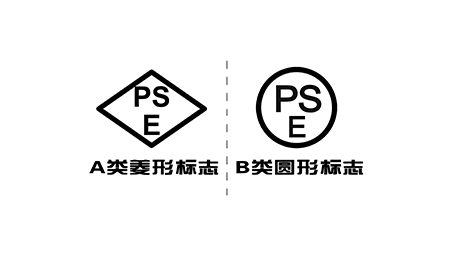
The PSE certification is a mandatory safety certification implemented by Japan based on the "Electrical Products Safety Act" (DENAN), supervised by the Ministry of Economy, Trade and Industry (METI). The battery pack belongs to a clearly defined specific electrical product and must obtain the more stringent rhombic PSE certification instead of the ordinary circular PSE certification for non-specific products. This is the core point that enterprises are most likely to confuse, and choosing the wrong certification type will directly lead to customs clearance failure. The core purpose of this certification is to prevent safety hazards such as short circuits, fires, and explosions during charging, discharging, and use of the battery pack, ensuring the dual safety of users and the equipment.
Combining the product characteristics of the battery pack, which integrates multiple cells and delivers high power output, the PSE certification follows Japan's exclusive JIS C 8715 testing standard, focusing on testing the core safety risks of the battery pack: including overcharge protection, overdischarge protection, short circuit protection, compression and impact, temperature cycling, cell consistency, etc. At the same time, it checks the flame retardancy of the battery pack's casing, circuit insulation performance, and comprehensively verifies the safety stability of the energy storage product. There is no room for ambiguity in the testing process. Any non-compliance with an indicator will prevent the certification review from passing.
The PSE certification process for the battery pack is clear and standardized, catering to the practical needs of enterprises going global. First, it is necessary to confirm the series and parallel specifications and rated power of the battery pack, prepare 2-3 test samples exactly the same as the production line, and simultaneously organize all the materials such as Japanese manuals, circuit diagrams, cell specifications, and component lists; then, entrust a third-party laboratory recognized by METI to conduct all safety tests. If there are issues such as overcharge control failure or insulation not meeting standards, the laboratory will provide a targeted rectification plan.
After passing the tests, the test report must be submitted to METI for registration and filing, obtaining the rhombic PSE certification authorization, and finally clearly marking the rhombic PSE logo and certificate number on the battery pack body, packaging, and Japanese manual, to comply with the export to Japan. The regular certification cycle is approximately 3-4 weeks. With a CB test report, the review time can be shortened appropriately.
The safety control of the Japanese market for energy storage battery products is extremely strict. Battery packs without PSE certification will not only be detained by customs and fined, but also be prohibited from being sold in the Japanese market. In actual processing, three key points must be remembered: it is necessary to obtain the rhombic PSE certification and cannot use the circular certification as a substitute; the specifications of the cells must be completely consistent with the production line products, and parameter changes require re-testing; the product materials must be in Japanese, and the safety warnings must comply with the local Japanese standards. Ensuring compliance with the PSE certification can lay a solid safety foundation for the stable expansion of the battery pack in the Japanese market.